
How to Choose Infra for MVP: A Firebase Case Study in Rapid Development
By Volodymyr Gutorov | 2025-11-04
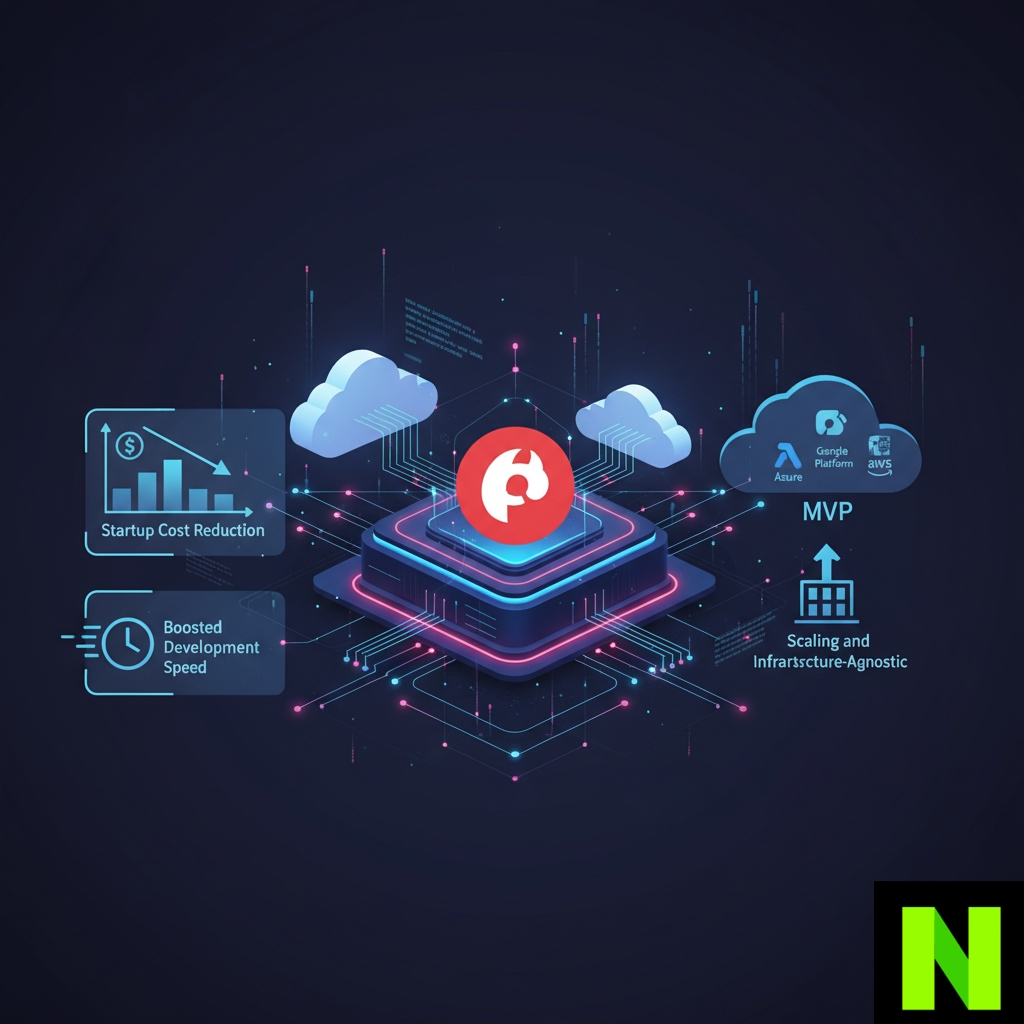
When building a Minimum Viable Product (MVP), especially for a startup, every decision is critical.
But none is more foundational than your infrastructure.
Your tech stack directly impacts:
- your budget
- your development speed
- your ability to scale
This is the core challenge in MVP development:
How do you build something robust, fast, and on a budget?
For many startups, the answer is Firebase.
We saw this firsthand in our ResearchTech case study, where the challenge was to take an AI‑powered due‑diligence platform from a proof‑of‑concept to a fully functional, investor‑grade SaaS application — and do it at startup speed.
Here’s why Firebase was the perfect choice for this rapid MVP build.
The Firebase Advantage: More Than Just a Database
Firebase isn’t just a single product.
It’s a comprehensive Backend‑as‑a‑Service (BaaS) platform built on Google’s infrastructure — a powerful, integrated ecosystem that was central to our success.
1. Drastic Startup Cost Reduction (The “Cheap MVP”)
For any startup, cash flow is king.
Firebase’s pricing model is extremely friendly for early‑stage products.
- Generous Free Tier — enough for development and initial user testing
- Pay‑as‑you‑go — you only pay for what you use
For the ResearchTech project, this meant significant startup cost reduction, allowing more budget to go into feature development instead of DevOps overhead.
2. Boosted Development Speed
This is where Firebase truly shines for a rapid MVP.
Its ecosystem of pre‑built, managed services allowed us to bypass hundreds of hours of backend development.
We used:
- Firestore — scalable NoSQL database
- Firebase Authentication
- Firebase Storage
These services work together seamlessly out of the box.
Instead of configuring servers, security groups, and databases manually, we managed everything from one clean console.
This let our team focus 100% on building the platform’s core AI and project management features — not boilerplate infrastructure.
3. Proven Performance During Pilot
An MVP must still be viable.
It has to work — and work well.
During the ResearchTech pilot phase, the platform performed exceptionally.
While we cannot share specific metrics, the infrastructure handled:
- complex AI orchestration
- real‑time user interactions
- high‑stability workloads
It proved to be a reliable foundation for a production‑ready application.
4. A Clear Path for Scaling and Migration
A common myth is that Firebase is “just for MVPs” and can’t scale.
This is false.
Firebase is built directly on Google Cloud Platform (GCP).
For ResearchTech, this provided:
- a clear path for future growth
- seamless integration with other GCP services
- the ability to scale or refactor when needed
You don’t hit a wall —
you start on a launchpad.
This built‑in potential for scaling and migration is a critical, often overlooked factor in MVP development.
We’re Infrastructure‑Agnostic: The Right Tool for the Job
Firebase was the perfect solution for the ResearchTech MVP, but the real answer to “how to choose infra for MVP” is:
It depends on the project’s goals.
Our team is multi‑cloud and selects the stack that best fits the client’s needs — whether it’s speed, compliance, or raw computational power.
Microsoft Azure
For our DelphInvest case study, the client required a fully Azure‑based solution.
We delivered a secure, enterprise‑grade portal using:
- Azure Functions
- Azure SQL
- EntraID
Amazon Web Services (AWS)
While we don’t have a public case study, we are equally proficient with AWS and have delivered robust AWS‑based solutions for clients.
The Real Key to Success
For an MVP, the right infrastructure can be the difference between:
- a fast launch
- or a failed project
Firebase provides an incredible runway —
but partnering with a team that knows which runway to choose is the real key to success.