
What exactly is a POC
If an MVP is about figuring out if the broad market wants your product, a POC is about proving to yourself and your stakeholders that the core idea is actually possible.
Focused
experiment
We often get ahead of ourselves in software. We have a "billion-dollar idea," but we don't stop to ask if the solution is realistic. That is where the POC comes in.
It isn't a polished product, and you certainly wouldn't put it in the app store. But it is a focused experiment used to validate two things: that the technology works, and that it actually solves the specific problem for the user.
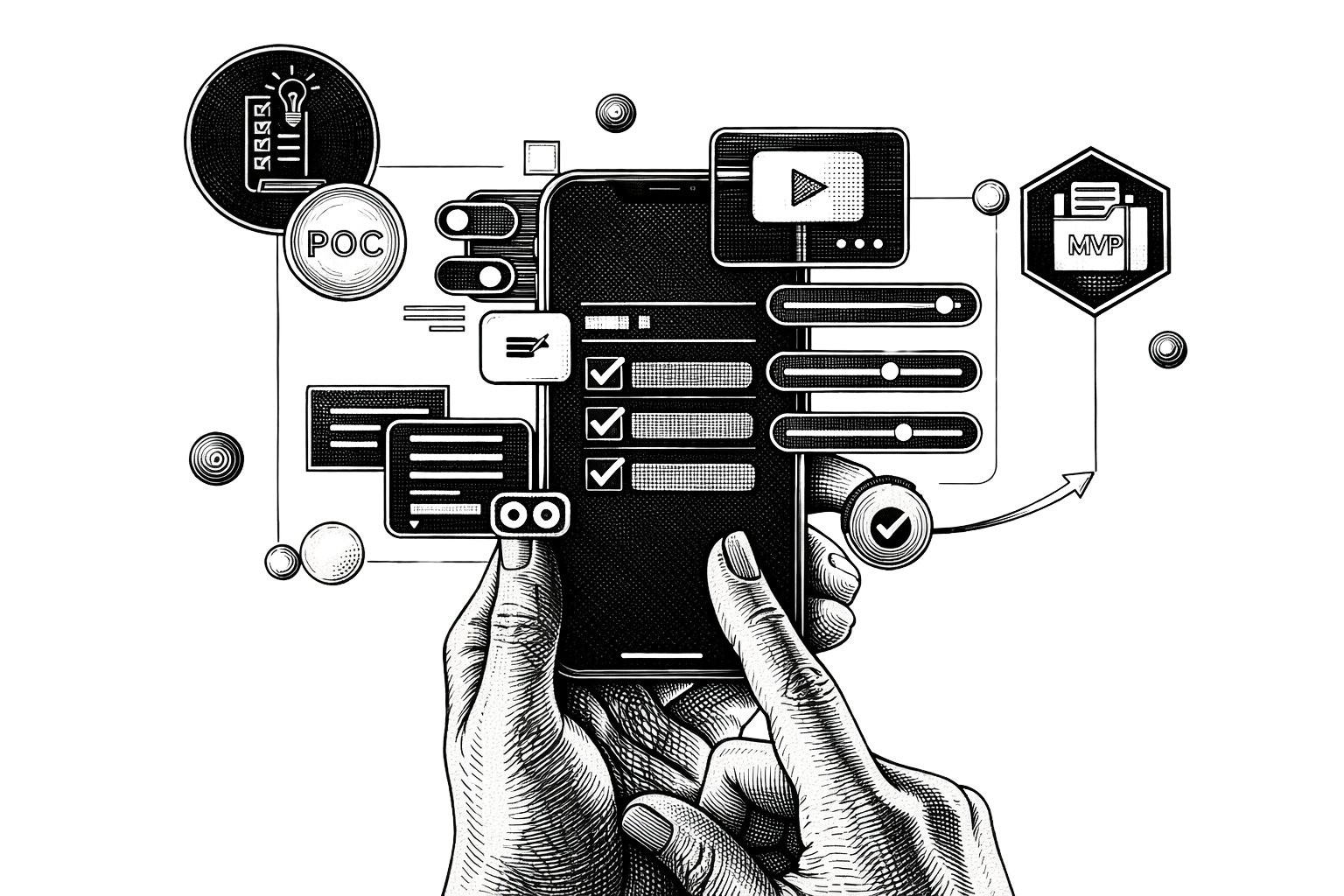
The Logic: "Can we do this, and does it help?"
Imagine you are pitching a new AI tool that claims it can instantly summarize hour-long legal contracts. An investor or a pilot client might say, "That sounds impossible. Show me."
You don't build the whole secure, cloud-based platform to answer them. You build a POC. You might just write a quick script on your laptop that takes one contract and spits out a summary.
If it works: You have validated the tech and won the user's confidence.
If it fails: You saved yourself a fortune by not building the full platform.
Development Arc
Breaking down
the name
Proof
You are looking for evidence. "Trust me, it'll work" isn't enough. You need to show a working model to prove the risk is manageable.
Concept
You aren't building the whole system (login screens, payment processing, etc.). You are just testing the core concept that makes the product unique.
Don't mix up your terminology
It is easy to blur the lines here. A POC validates the solution (can it be done?), whereas other stages validate the business (will people buy it?).
Usually, the POC happens first. You prove the capability to your early stakeholders. Once you have that green light, you move on to building an MVP.
A Simple Example:
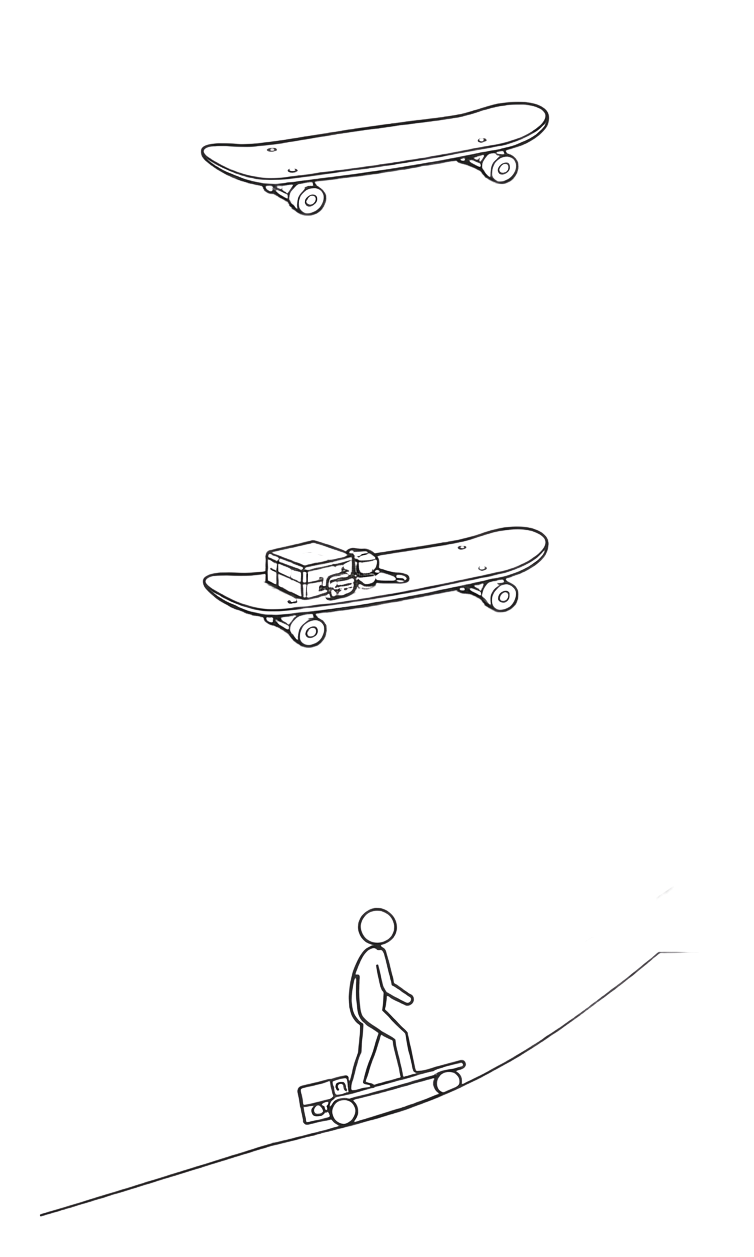
The Electric Skateboard Let's go back to the transportation analogy.
THE PROBLEM
You want to sell an electric skateboard, but your investors are worried a battery that small won't have enough power to push a human up a hill.
THE POC
You don't build the beautiful deck or the painted wheels yet. You duct-tape a battery to a motor and a rough plank, then ask a user to ride it up a hill.
THE VALIDATION
It looks ugly, but if that user makes it to the top of the hill, you have proved the concept. You have validated the capability before spending money on design.
Why bother with a POC?
It reduces the "feasibility risk." There is nothing worse than selling a client on a shiny new solution, spending half your budget designing the interface, and then realizing the core engine can't handle the workload.
A POC gives you a definitive "Go/No-Go" signal from both your tech team and your early users before you commit serious resources.